Sunday, March 11, 2012
Friday, March 9, 2012
Winter Weather and Wellness in Vermont
Vermont winter storms come from a handful of happenstance.
The weakest and more localized storms are “mountain-induced
events.” This is weather generated
by slope and elevation. Much of the winter we can earn a bounty through
lake-effect snow. Fronts are what brings most of our meaningful weather. They are typically driven by two massive and
antipathetic wind patterns, prevailing westerlies and polar easterlies. The largest storms are ‘Nor’easters.’ Most winters (but not all winters) at least an inch of snow
falls on at least 20 days and as many as 40 days and the
ground is covered by snow from November through at least Easter.
It's almost too complicated for words. The winter weather in
Vermont is deeply affected by elevation, terrain, slope, which direction a
slope faces, wind, localized wind, Lake Champlain, the Atlantic Ocean, ice on
the Great Lakes (and Lake Champlain), wind currents in the Pacific (and the Atlantic) to name
just a handful of an infinite number of factors. Needless to say then no two winters are alike.
As we all know it is hard weather to
predict. Meteorologists describe
this difficulty as “highly changeable,” which is a terrific euphemism.
Take
a recent Saturday, for example.
The forecast was for a day of rain and freezing rain. It was sunny, calm and warm – at least at
our house. It was misty on Mount
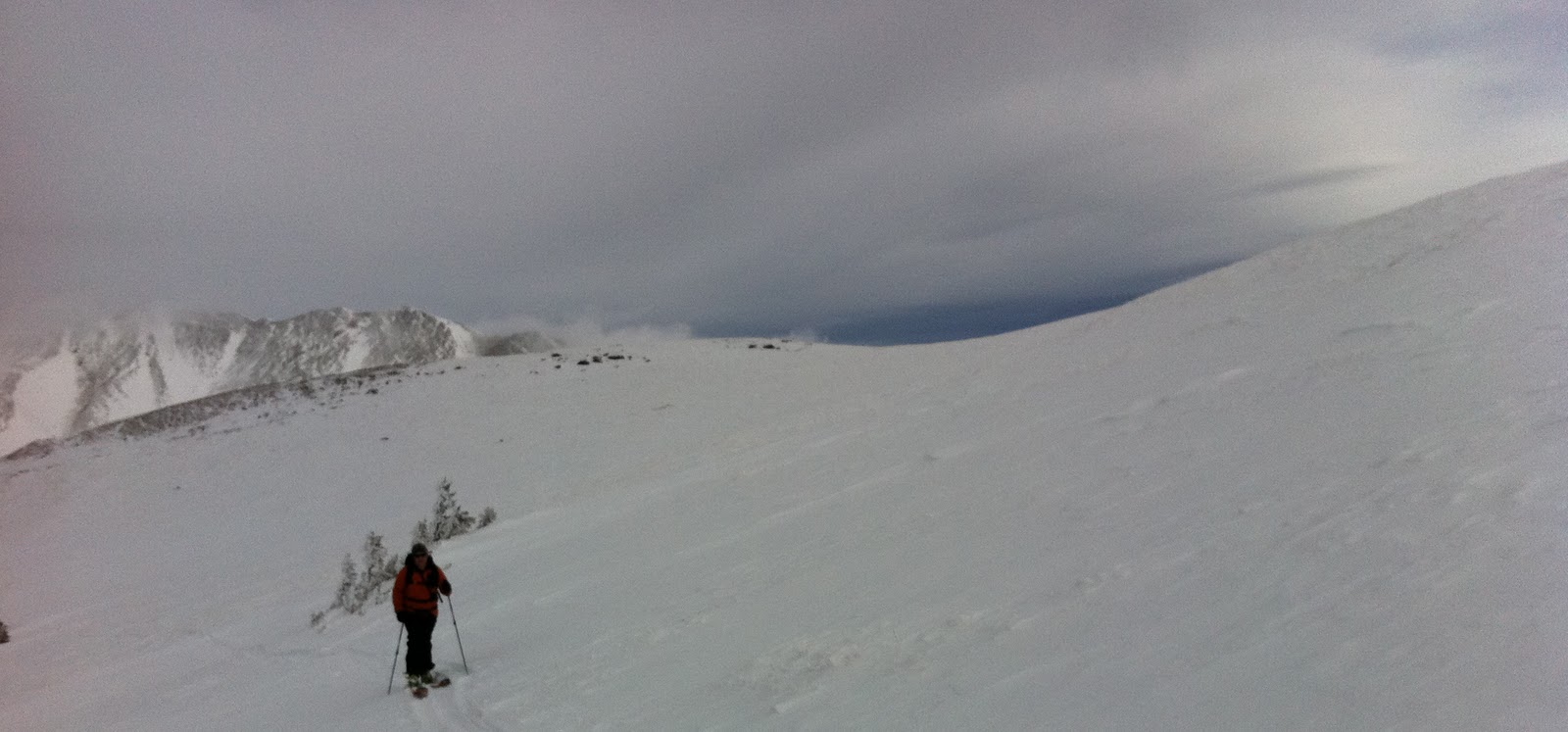
Mansfield in the morning and rained hard for about twenty minutes. We never would have know it down in the valley. I skinned up the mountain late that day under a calm and bright blue sky. Near the top I experienced high winds
(surprise surprise) and thunder.
Thunder in March.
Thunder
in March is not normal. Wind is
always normal. Beyond localized conditions, Vermont in winter is affected
by the “prevailing westerlies,” which are born in the tropics and driven
north. These winds move the way they do
because of the rotation of the earth.
North of us are the “polar easterlies,” which are blocks of extremely
cold air driven away from the poles to the west. The polar easterlies and prevailing westerlies slam into
each other around here. In the
winter the boundary is typically southern New England. In the summer the
boundary moves north.
This collision zone is called the “polar front”; warmer moist air
to the south, dry cold air to the north.
The collision creates winter storms, typically snow but not always,
typically the snow falls here but not always, typically it means Vermont has
snow cover from fall through spring (but not always). The jet stream, racing high above us, determines where this
boundary sits day-to-day, year-to-year.
It’s too much to even think about understanding how many variables
determine where the jet stream sits.
Forecasters up here must be brave because forecasting is a fool’s
errand in Northern New England. It
can make people laugh out loud.
Weather can be decidedly different from one town to another, at one
elevation or another, on a north-facing slope compared to an easterly slope.
The
prevailing westerlies can bring us lake-effect snow – moist air brought from
open water of the Great Lakes – and the collision between the polar easterlies
and westerlies can bring tremendous blizzards. Occasionally (more and
more?) the prevailing westerlies collide so quickly with the polar easterlies
that the warm air climbs on top of the cold air creating an inversion. If the collision causes a storm it can
be rain above and turn to ice as it falls through the colder air below. Ice Storm. We can also be given the gift of a strong Yankee Clipper,
which moves from the colds of the Canadian prairies and races east, typically
bringing light snow and then massive cold and sometimes a blizzard.
Another
pattern usually striking late in a winter can hit Vermont hard. Although the westerlies and the polar
easterlies mean we are not a maritime climate, the cold water current along the
Atlantic Coast can generate massive storms. The prevailing westerlies draw warm, moist air from the Gulf
of Mexico up the coast. When the
weather hits the cold North Atlantic the pressure becomes cyclonic. When temperature differences and the
size and depth of the collision are strong these colliding patterns generate
massive storms – very like hurricanes – driving tremendous amounts of snow (or
rain) into Vermont, counter-clockwise from the coast.
And here’s what we love.
When it’s cold and dry in February and March, a big Nor’easter will
bring three feet of snow in a day.
The storms can also reform and cycle through more than once. A Nor’easter during a cold March can
dump as much snow in a day as all of the snow from all of the days of the rest of the
winter. For many it is why we are here.
We
can barely predict the weather. We
have no control over it. I barely understand it and I am sure there is something metaphoric in writing
about it (but like Chance the Gardener I won’t claim to know what it is).
The only thing certain about the winter weather in our little town
is this: nothing we do impacts our collective wellbeing more. It makes us. And, to borrow from another film,
anyone who tells you differently is trying to sell you something. In much of the country it is full on spring. Here, it is too soon for spring. We crave more winter.
David Rocchio lives, works and writes in Stowe, Vermont. (c) 2011 David Rocchio
Thursday, March 8, 2012
Before Winter's Done
Big storm two Sunday's ago; hopefully not the last.
David Rocchio lives, works and writes in Stowe, Vermont. (c) 2012 David Rocchio
Monday, February 27, 2012
Monday, February 13, 2012
Local Performing Arts Center Potential Home Run
In
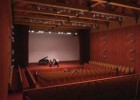
our town we have a new performing arts center. It is a beautiful building. The acoustics are world class. With room for more than four
hundred people, the theater is large enough for most any program. The seats are comfortable and there is
not a bad spot in the house. The
lobby is large, crying out to host parties before and after a show. The staff and volunteers are
terrific. But it is never full and
often audiences are very small.
Why is it not thriving?
Monday, December 19, 2011
Keep School Buses Local (And Other Reasons To Know The People Around You)
I live in a small town. And in our town a local story has struck a nerve.
The story is whether it is worth saving money by awarding our school bus
contract to a national company or whether it is better to spend more, maybe
$50,000 or so, so our school buses are run locally. Although it’s a local story it is a universal question, but
I’ve got to back into it.
We have a new Thai place in town. It is in the same spot as the old Thai place and has the
same staff and décor as the old Thai place. It’s even run by the same wonderful woman, who works
hard. I don’t know why they have
changed their name and said they are new – it might be strategic and it might
be personal – but as part of the grand opening they threw an open house. Free food and a big party.
The kids and I joined a swarm of neighbors and friends. We walked in to a warm welcome and were
hustled to a long family-style table.
We saw many familiar faces around the place as we elbowed our way to the
platters of pad Thai and sushi,
aromatic chicken and spicy dumplings.
We looked around at tables crowded with parents and kids, couples out on
a free date, lone diners elbow to elbow with big groups, all enjoying the
buffet party. A guitarist belted
tunes and hammered away on his axe, like a John Hiatt shouting over the
restaurant din. Ski bums, worker
bees, and hangers on at a free feast.
Like a church supper, we all talked and laughed. We commented on the savory rice,
welcoming the new-old Thai place – Hot
Spice – to it’s new, well same, home on the Mountain Road.
And
right on the heels of the Thai Place Open House came the rousing annual
Christmas party at our local paper, the Stowe
Reporter. Early in the cycle
of holiday revels, the Stowe Reporter Party opens the season and is a real
throw down. The party spills from
the reception area of the paper’s headquarters – an old clapboard house in town
– photo in last post – into the small rabbit warren of offices and up the
windy, creaky wooden staircase. Some
years it’s a bender (I didn’t stay long enough this year to say). The publisher’s palatial penthouse was
jammed, elbow-to-elbow, with an entire town, including many faces from the Thai
feast.
Writers, ad guys, managers, business owners, friends, enemies,
colleagues, their kids, town officials and at least one dog libated to ring in
the season at the town’s weekly broadsheet. Finding someone to talk with was about as easy as putting
off chores.
It’s all a part of being in a small town. We are living out of each other’s
pockets. We say ‘good morning’
when we drop the kids off at school, share a kind word when we see each other
getting coffee ten minutes later at the gas station, nod hello at the grocery
store, smile kindly when driving politely through the stop sign in town. Our accountant’s daughter is our baby
sitter. Everything we do is with the people we live around. It is community and the commonality of
each event is we are all at them together. Well, not all, that would be weird, but the overlap is
interesting. We socialize with
each other and see each other regularly.
This is not typical, but it is small-town normal. There are upsides and downsides to
living in close quarters.
We
could easily live where we are anonymous.
Where each event we attend is with a different group of people; where we
don’t know the diners around us at a restaurant or the faces at the elementary
school in the morning or the coffee shop later in the day. Urban anonymity is a short drive in any
direction. Sixty million people
live within a five-hour drive of our town.
But we live here, saying hello to the same six people five times
on a given day. More than any
reason to be here – where it is cold and dark half the year, the mosquitoes have
names and you cannot get take-out – is community. And this is why the idea of pulling the school bus contract
has struck a nerve.
Stories
about school bus contracts do not make the paper in most places in
America. The big yellow buses move
through towns and cities countrywide.
For the most part the drivers are as unknown to the parents as, well,
the other parents. I bet though
people crave stories like the bus contract story. People crave connectivity even if they’d like it with a
healthy dose of anonymity (and the availability of take-out).
With
seven billion people on the planet isn’t it nice to know a few of the people
around you? I think it is.
A month ago our kids’ school bus driver came up to us at, yes, the
Thai place in Waterbury, a town down the road. We learned from her our street was going to close and we
chatted for a while. She knew us. She came up to us. A friend told me about how her third grader – doing what he
was supposed to do – got off the bus at the end of a quiet dirt road. It would be dark soon. The driver stopped the bus and called
the parent, double-checking the drop-off was right. Has your child lost a backpack? It’ll be at the bus barn. Substitute driver?
Oh that’s Mr. McHugh, a cop and neighbor in town. At many away sports events the only
parents in the room are the bus drivers.
It
is just not worth saving a few dollars by shipping the bus contract out of
town. Being analytical and
efficient has its place, but is not everything and can in fact be quite
corrosive. The cold calculus of
economics is devastating communities worldwide. Look at some basic barometers – school quality, neighborhood
safety, teen drug use – and we are failing. Call it commonsense or call it a ‘happiness index.’ What is at stake when we give up some
basic connectivity is nothing less than our humanity.
Sounds a stretch but think about it: regardless of where we live community is all about
connectivity. The buses are true
connectors – they take the kids from one life – home – to another, bigger, more
anonymous life – driving the kids to school, sport events, the Boston Science
Museum, Maine, even New York City.
That connector could be a less expensive one, separate from
community. Or, if we’re up for it,
it could be us.
Why is it important to have connectors? It makes the world safer; people are more polite, makes it harder to rationalize unethical behavior if you know your victims (right, bankers?); less worry and more help getting through the day; more smiles during the day; peace of mind; less likely to drive like a nut. The more connectors we have in life - the more we know about what is going on around us - the better is, well, life.
Here's the question, and in the case of the school bus it is a simple one: How much is it worth to know who is driving your kids to school? The answer is a lot.
The harder versions of this question are how much is it worth to know who is growing your food, making your shoes,
sewing your clothes, policing your streets, running your bank, running the businesses we rely on? Calculus might be more complicated but the answer is the same: Local is better.
And I don’t think it only works rural. It might not be the most efficient way to run the world, but
it would be the most human way.
David Rocchio lives, works and writes in Stowe, Vermont. (c) 2011 David Rocchio
Friday, December 9, 2011
Local Paper Throws Holiday Fest
The Stowe Reporter is our local weekly. It's annual Christmas/Holiday Party gathers the whole town. See the windows all steamed up? Great way to start the holiday season.
David Rocchio lives, works and writes in Stowe, Vermont. (c) 2011 David Rocchio
Monday, November 14, 2011
The Road We Live On
For where we live, in northern Vermont, our road is a busy street. It is straight and it is paved - two rare features for our neck of the woods - and therefore it is subject to being treated not as a quiet country byway but as a good old American highway. This road, Stagecoach
Road, was recently closed for two weeks.
This all stems from Irene. As hurricanes go Irene was not too windy or too violent. Irene though carried massive amounts of rain. I could stand outside in the downpour and smell the sea air, which is notable only because we live hundreds of miles from the sea. Irene was a beautiful storm but a dangerous one. No one was hurt, and we escaped with no damage, but the tail end of our road took the
brunt of the storm. A neighbor's basement collapsed. The edge of the street near where it meets the main road to town eroded away.
For a month or more after the storm the town end of
Stagecoach was cut to one lane of traffic. This change was welcome to anyone living on the road because
it slowed traffic for a short stretch. This slowed the racers.
We
didn’t hear of the plan to close the road. This doesn’t mean the plan wasn’t discussed publicly; it
just means the bad shape of the road simply didn’t register on the
scale of things to worry about. My
son did ask one day whether when they fixed the road it would be blocked off; we talked about it on a drive to school one morning. We concluded, ‘no, the road would be
left open.’ We didn’t talk about it again. And we were wrong.
In fact we only heard the road was going to be cut from the rest
of town when we ran into the kids’ school bus driver at the Thai Restaurant in
Waterbury, a town near the interstate. Yikes. No school bus. Need to drive north, to the neighboring town in the other direction, Morristown, and then reverse direction, adding time to the day. Adjustments were called
for. We put the planning gears in motion, set the alarm a bit earlier and
prepared to learn a new commute to the school, a new plan to get the shopping
done, a new pattern to coming home for lunch.
In fact though getting to town was not the big news of the
detour. The big news was the
quiet. Our little straightaway of
road is typically not treated like the settled country lane it is. Our country road is treated like a speedway. Somehow saving up to one and one half
minutes on a drive to Mo’ville justifies pushing the old Buick up to
eighty while flying by the old Misty Meadow Herb Farm. And it is to some even worth passing
at breakneck speed, not for a second thinking a family might be pulling out of a driveway
on this narrow road.
It's not like we rail against the road. We are adjusted to it. We sit on the porch in the summer, drinking our morning coffee, watching the pick up trucks drive by. Occasionally we swear at a crazy driver thinking this is a Batman Movie but mostly we take it in stride. But then they blocked the road and everything became quiet.
And the quiet was welcome. Yes, we had peace for two terrific
weeks. We could hear the
breeze. No car noises marred the
kids’ band practice. The hens
could graze along the edge of the road.
We could collect the mail without safety goggles, helmet and yellow
vests.
The peace wasn’t perfect.
Despite three signs saying, I’d say pretty clearly, “Road Closed,” there
were some who drove past the signs, past the barriers and up to the
construction site thinking the signs meant road closed “but not for me.” Picture it: car drives by confidently
toward the end of the road, pauses, looking for a cut in the work to sneak
through, realizes there is no cut through and then skulks back north with
tailpipe between legs.
Road closed. Cut off.
No one calling by. Deeply
quiet. Forced to change
long-settled patterns of behavior.
One big rainstorm and we’re all in turmoil.
Okay, it was little things like we shopped at the big grocery store in Morrisville rather
than our own little one in town. It wasn’t big things, like Berlin, August 1961; waking up one
morning faced with the Berlin Wall. But it was a window into how things can
change.
Geography and the vagaries of civil engineers have as much to do with
community as what we want to define ourselves. One minute
we are a short, straight mile from the edge of town and the next minute we are
a looping ride in the wrong direction, by a small golf course and then back
into town with the traffic.
Inconvenience, change, busting up of routine; it is always difficult.
Just
before the roadwork was done I drove my little girl down to see the
construction site. The
steamrollers were blocking the road so I parked and we walked onto the shiny black macadam, looking down to the new retaining walls and massive piles of moved
earth and the huge machines parked, waiting for the new day. Just across the barriers was the road to
town, so close we could taste it.
In a day we’d have our road back, new and improved. How exciting!
My little girl didn’t care. When I turned to get
her reaction she was well into her walk home; already past the vet’s
house; not at all interested in the newness and the construction site and the
reopening of our artery. She was
striding down the deserted asphalt strip in the gloam of a late
fall dusk. There was no
traffic. It was quiet. She had adjusted to Stagecoach as
cul-de-sac and all was well with her world.
David Rocchio lives, works and writes in Stowe, Vermont. (c) 2011 David Rocchio
Friday, October 21, 2011
How To Survive Stick Season
Stick
season is one good windstorm away.
When it comes, when the leaves are all down and the grass finally dead,
the forests closed to anyone not wearing a bright orange hat, the firewood
either stacked or it’s too late, the clocks fallen back into that incredible
gloam, it is time to hunker down.
Friday, October 14, 2011
Baseball and Photography
It seems no one where I live gives a rat's ass about the baseball playoffs. This fall is terrific baseball, though, and for those of us who grew up with the old division in baseball the idea of a Tigers - Brewers world series is pretty cool. Texas and St. Louis are good too.Another great thing about following baseball is reading about the games in the papers and the best thing about the coverage is always the photography. This shot by David Phillip of the AP is almost perfect. Everyone is leaning; the image is practically moving; the result -- safe or out -- is in the balance; the crowd forms a perfect backdrop, you can almost make out the beers in the fans' hands tilting with the play, about to be spilled when the umpire makes his call. Pretty cool shot.
David Rocchio lives, works and writes in Stowe, Vermont. (c) 2011 David Rocchio
Thursday, October 13, 2011
This photo of my sister Tina, niece Giulia, son Callum and me at Capalbio was so beautifully captured by new friend and photographer Fabio Mazzarella.
David Rocchio lives, works and writes in Stowe, Vermont. (c) 2011 David Rocchio
Sunday, October 9, 2011
Capalbio Cinema International Short Film Festival
The short film festival in Capalbio feels much more like an extraordinary retreat for filmmakers than it does a festival. I have met filmmakers from everywhere. A few specific places: Cairo, Holland, Vladivostock, Portugal, Norway, Taiwan, Palestine, Italy. Oh, yeah. Italy.
Not only am I making new friends who share a passion in filmmaking but I am making these friends just north of Rome, where Tuscany begins, in Maremma. Capalbio itself is an ancient fortified hill town facing the sea. The festival is in a village between the citadel and the sea.
The cinema is a beautiful old block of a building. The plush seats face a huge screen and the black ceiling is so high above us I feel I am watching films under the stars. We move from the cinema to a restaurant. We can choose from pasta or risotto. We are given wine. We talk about film, cameras, actors and extras, permits, shooting without permits, editing, music, sound. We talk about the films we've seen -- both the films each has made and the others we viewed but did not make. The films are all good, and different, and interesting. Some are odd and some are sweet. Some I like and some are not my cup of tea. They are all worth seeing. Seeing. It is why we are here.
And then we go to the sea. The Mediterranian is straight ahead. The interns drive us in the fresh, black Lancia Deltas to the beach. They drive very fast. We hold on. It is windy. The sand stings our legs. It is cold but the sea is warm. We swim, and dive, and talk about film. "This is like in a movie!" Of course.
The interns drive us everywhere. To an artist's lair for lunch. To the hotel. To the cinema. To the beach. From the airport, from the stazione, from real life. They are young and interesting. Interested.
Interested. How can you not be interested when there is so much? Films about revolution in the Middle East; photography from the farthest reaches of Russia; film noir, comedy, farce, suspense, animation; conversation at lunch with a Sicilian; a lecture on tweeting revolution.
Whether a retreat or a festival or both, Capalbio has been a touchstone. It is inviting, chaotic, franetic. It is rewarding and energizing. I will take it with me and am glad to have been invited to be here.
David Rocchio lives, works and writes in Stowe, Vermont. (c) 2011 David Rocchio
Not only am I making new friends who share a passion in filmmaking but I am making these friends just north of Rome, where Tuscany begins, in Maremma. Capalbio itself is an ancient fortified hill town facing the sea. The festival is in a village between the citadel and the sea.
The cinema is a beautiful old block of a building. The plush seats face a huge screen and the black ceiling is so high above us I feel I am watching films under the stars. We move from the cinema to a restaurant. We can choose from pasta or risotto. We are given wine. We talk about film, cameras, actors and extras, permits, shooting without permits, editing, music, sound. We talk about the films we've seen -- both the films each has made and the others we viewed but did not make. The films are all good, and different, and interesting. Some are odd and some are sweet. Some I like and some are not my cup of tea. They are all worth seeing. Seeing. It is why we are here.
And then we go to the sea. The Mediterranian is straight ahead. The interns drive us in the fresh, black Lancia Deltas to the beach. They drive very fast. We hold on. It is windy. The sand stings our legs. It is cold but the sea is warm. We swim, and dive, and talk about film. "This is like in a movie!" Of course.
The interns drive us everywhere. To an artist's lair for lunch. To the hotel. To the cinema. To the beach. From the airport, from the stazione, from real life. They are young and interesting. Interested.
Interested. How can you not be interested when there is so much? Films about revolution in the Middle East; photography from the farthest reaches of Russia; film noir, comedy, farce, suspense, animation; conversation at lunch with a Sicilian; a lecture on tweeting revolution.
Whether a retreat or a festival or both, Capalbio has been a touchstone. It is inviting, chaotic, franetic. It is rewarding and energizing. I will take it with me and am glad to have been invited to be here.
David Rocchio lives, works and writes in Stowe, Vermont. (c) 2011 David Rocchio
Wednesday, September 28, 2011
Thursday, September 22, 2011
Wednesday, September 21, 2011
History In The Making
I write a column for my weekly newspaper, the Stowe Reporter. I wrote for a while for a big Vermont daily and was asked to write for another one. I didn't, though because there is something very close to life about a local weekly paper. Local papers are about layers of lives
lived in one place. I had this thought in mind as I read last week's Reporter.
Sunday, September 4, 2011
After Irene: A Hometown Tour
The Green Cup, a coffee
shop nestled next to the covered bridge in Waitsfield, Vermont, is gone. Wiped out by Irene. It was gutted by the raging flood. Next to it, the old white clapboard photo studio, lifted off it’s 19th
century foundation, sits slammed into the coffee house. The two buildings are jammed together like a car wreck. Just down the street also gone is a wonderful restaurant
called Mint and a dozen or more other small businesses next to the Mad River.
I drove through Waitsfield, Fayston and Warren. Stopping to help mop up a bit, driving
all the way to Granville – usually a fifteen minute drive south of my home town
of Warren but this day taking an hour over torn-up, patched up and mangled dirt
roads (Route 100 through Granville Gulf is washed out). Talking to people along the way, I
found communities that had been slapped hard but not knocked down.
Tuesday, June 28, 2011
Travel to France: Provence, Grasse, Cabris and the Perfect B&B
Here is a piece about a terrific Inn in the south of France. But first, a disclaimer: I am not a travel writer. Not only am I not a travel writer, I don’t read travel magazines or guides or books or websites dedicated to explaining where people should go and what they should see. This is because I like to discover, meaning I would prefer to find a place worth seeing by turning down a small road without even a utility line strung alongside, while quite hungry, and it being late, and we not knowing where we are headed, but having an instinct we can find something interesting along the way. It doesn't always work, of course. We have suffered some pretty awful nights. We have also come upon some true and unimaginably extraordinary experiences (and meals and views and places to sleep or hike or swim or rest). And I don’t think the experience is the same if you haven’t found a place yourself. And if you go to the places touted in the tour books guess what you find? People who read tour books. And I typically take the view, well, that these experiences are interesting in part because they are private and known only to self and those with whom we choose to share such experiences. So I’ve not written about them. But I am not sure about my decision to keep exploration so private.
Sunday, June 12, 2011
Friday, June 3, 2011
Memorial Day, Loss and Rememberance
In the United States 30 May is Memorial Day. It is a day for reflection, personal and public. In the public corner, our little town marks the day well and quietly. Each year the town hosts a small parade. It is really just the high school marching band and veterans of wars walking at march pace from the center of the village to the cemetery on the edge of town. The parade is managed with dignity and just enough fun. The marching band is always prepared and poised. The old soldiers, represented by the American Legion, take the responsibility for the day seriously. The cemetery too is well maintained and ready for its close up.
This past Memorial Day my daughter and I barreled into town from the north just barely in time for the parade, and got firmly stuck in a line of cars just past the grocery store, the police having blocked Maple Street early, giving the marching band plenty of room to maneuver. Antonia and I parked the car in the dirt along the edge of the pavement and raced toward Cemetery Road, she carrying the camera, me hanging on to my morning coffee. We first saw the parade in the distance, a small swarm of figures coming our way, up the slight hill from the center of town toward Cemetery Road, band music echoing up the hill toward the blocked traffic. Antonia began firing pictures. She took so many they play back like an old-fashioned movie, each frame not capturing quite enough of the action but more than enough to tell the story.
Wednesday, May 11, 2011
A Short Film for Summer: The Brothers
Here is a link to my short film, The Brothers, which we shot last summer. It is the film of the story, The Brothers, posted here. The story and the film are quite different. Some of the story just could not be told in the same way. Some of the story could have been shown in the same way but we didn't have any money.
The actors are all local kids in our small town. Most are from my little league team of last summer. Great kids and actors. Oh. And one is my son!
The dog is our dog, Dexter. He did a terrific job.
We shot the film on our porch, on a ski jump in Hanover, NH and on the Long Trail in Northern Vermont. We did all the shooting in two days with a crew of no more than four and at times just two. All the sounds -- the entire soundtrack -- were recorded live 'on set.'
There are more stories to tell about the story and the making of the film. I will get to them but not today.
Enjoy.
David Rocchio lives, works and writes in Stowe, Vermont. (c) 2011 David Rocchio
The actors are all local kids in our small town. Most are from my little league team of last summer. Great kids and actors. Oh. And one is my son!
The dog is our dog, Dexter. He did a terrific job.
We shot the film on our porch, on a ski jump in Hanover, NH and on the Long Trail in Northern Vermont. We did all the shooting in two days with a crew of no more than four and at times just two. All the sounds -- the entire soundtrack -- were recorded live 'on set.'
There are more stories to tell about the story and the making of the film. I will get to them but not today.
Enjoy.
David Rocchio lives, works and writes in Stowe, Vermont. (c) 2011 David Rocchio
Wednesday, May 4, 2011
A 9/11 Flag and Losing Osama
I was in my office the morning of 9/11. My secretary came in and said ‘a plane has flown into the World Trade Center.’ I kept working, not wanting to rubberneck. I did not walk down the hall to see what was going on until she came back, in tears, and said ‘a second plane has hit the other tower.’ So that’s how a living, decade-long nightmare starts.
Two days later, like almost everyone else, we went out and bought a small American flag. We tied it to a fence post along the front of our field. Nearly everyone flew a flag, even those of us who are not the flag waving type. I decided then the flag would fly until the nightmare ended.
It was a shockingly sad time but we were united in grief and horror. Not just in the US, either. I remember the headline on September 12, 2001 from Le Monde in France: “Nous sommes tous Américains,” or “We are all Americans.” Hundreds of thousands marched in support of the US. In Berlin. That unity obviously faded. Maybe now it is coming back.
We heard the news bin Laden was dead this past Monday morning. We were getting the kids out the door for school. We were listening to a Canadian radio station so the story was first but not blaring as the CBC began its newscast. Given that understated Canadian way, it took a minute to sink in what the announcer was talking about. Jackie looked at me, and I thought for a second. Commandos, Pakistan, Obama, Osama.
Two days later, like almost everyone else, we went out and bought a small American flag. We tied it to a fence post along the front of our field. Nearly everyone flew a flag, even those of us who are not the flag waving type. I decided then the flag would fly until the nightmare ended.
It was a shockingly sad time but we were united in grief and horror. Not just in the US, either. I remember the headline on September 12, 2001 from Le Monde in France: “Nous sommes tous Américains,” or “We are all Americans.” Hundreds of thousands marched in support of the US. In Berlin. That unity obviously faded. Maybe now it is coming back.
We heard the news bin Laden was dead this past Monday morning. We were getting the kids out the door for school. We were listening to a Canadian radio station so the story was first but not blaring as the CBC began its newscast. Given that understated Canadian way, it took a minute to sink in what the announcer was talking about. Jackie looked at me, and I thought for a second. Commandos, Pakistan, Obama, Osama.
Tuesday, May 3, 2011
My 9/11 Flag
Tuesday, April 5, 2011
Winter Never Ending
We live where it is still winter. Not mild wisps of the end of season winter, but full on two feet of snowpack and blowing winds winter. We were all recently fooled by a predicted April Fool’s storm. We were supposed to get two feet of heavy, wet snow. We didn't. We got three more inches of light snow. It did not matter. The extra layers would have been for bragging right only. It is still like mid-winter here and absent an Old-Testament style rain we will be avoiding yard work, running baseball practices inside and enjoying skiing the sides of our mountains for a month to come.
Not only is there plenty of snow but people are out and enjoying it. Yes, there is some grousing but, come on, six months of hard winter is not okay. Aside from the grousing though there is skiing and boarding to be had and on this past Sunday our local hill was like a community party spread out over 500 acres. Kids zipped through every nook and cranny. The ample, fat line at the chair lift was like being in line to buy groceries in our small town – can’t stand there without saying hello to a dozen people. And the bluebird day made the ride up the lift an “E-ticket,” to borrow from Walt Disney-land, in its own right. Mountain in high relief; the Notch standing out like an Albert Bierstad painting of Yosemite; the White Mountains to the East hovering like clouds on the horizon; the lift line in front of us a highway for speed, for deep tele-turns, for snowboarders arching their trays like they are in a ballet. The upper sections on the front of the mountain were snow-filled and bone dry. This is April in snow country and we might as well enjoy it.
It is hard to write about skiing. There is a feeling associated with moving downhill, at speed, on skis or I will guess a snowboard, unlike almost any other endeavor. Surfers probably feel the joy of unfettered motion every now and then. Maybe ski-diving. Michael Jordan felt it playing basketball, I’d guess. There are not though too many sports where mortals can fly. Skiing is as close as I’ll ever come to Michael Jordan. That sense of peace is hard to come by in life. Here? It is a five-minute walk from any particular point on the compass.
I have an old pair of skis. They are Atomic GS, racing stock. They are 210 cm long. The bindings crank down until the boot is secured to the ski as if welded. I use to take them out maybe once a year. I would take them down a famous trail here -- the Nosedive -- which starts with three hard, steep turns through a shadowy gap on the side of our mountain. I'd take them out on an early morning late in the winter. I would point the skis into the turns at the top of the trail. They’d set like rails. I leaned them over and was anchored to the ground. As I leaned the skis accelerated. I rolled through my turns, taking the shock of the hill in my quads. Eventually I just straightened out and flew. The wind roared as I slid downhill. And then I stopped. And then would think ‘that was stupid.’ I’m old enough not to break them out any more. Well, maybe one more time.
The snow this year just built and built. It was incremental. And then it rained. And then two feet of snow fell in what seemed like an hour. Where we live it is touristic but also rural. There is not a lot to do some days. This year, though, there was lots of snow. It seemed many days the entire town was on our hill. There is lots to what makes up a community. Here, the mountain is a big part of who we are. This year it seems we used it more, it was kind to us and six months of winter does not feel so bad.
Saturday, March 26, 2011
Time, Life, Watching Sleep.
When days are busy and interesting there is no time to write. When quiet and settled there is time but nothing really to write about.
Today? Stacked wood, read Wolf Hall, am now listening to opera on CBC 2. My son is sleeping on the couch, a late-winter and late-day sun pouring onto him through the back window. The dog rests by the door, occasionally moans, looks at me with big round eyes. I eat too many roasted, salted nuts. I drink a ton of water.
Next I will take the dog out, walking on the crusted top of a foot or more of old, beaten snow; make a shopping list for a dinner to be cooked (fettuccine with hot sausage, kale and cheese; slices of thick steak pan seared in oil and garlic and rosemary and then served on a bed of baby arugula and with a sauce of red wine vinegar and salt; a salad of young greens, olives, artichoke, pecorino cheese); shop; cook; drink; eat.
The past few months are too full to think about let alone write about. At least not today. Today I am focusing on as little as possible as well as possible. I am busy just watching my son sleep.
David Rocchio lives, works and writes in Stowe, Vermont. (c) 2011 David Rocchio
Today? Stacked wood, read Wolf Hall, am now listening to opera on CBC 2. My son is sleeping on the couch, a late-winter and late-day sun pouring onto him through the back window. The dog rests by the door, occasionally moans, looks at me with big round eyes. I eat too many roasted, salted nuts. I drink a ton of water.
Next I will take the dog out, walking on the crusted top of a foot or more of old, beaten snow; make a shopping list for a dinner to be cooked (fettuccine with hot sausage, kale and cheese; slices of thick steak pan seared in oil and garlic and rosemary and then served on a bed of baby arugula and with a sauce of red wine vinegar and salt; a salad of young greens, olives, artichoke, pecorino cheese); shop; cook; drink; eat.
The past few months are too full to think about let alone write about. At least not today. Today I am focusing on as little as possible as well as possible. I am busy just watching my son sleep.
David Rocchio lives, works and writes in Stowe, Vermont. (c) 2011 David Rocchio
Monday, March 7, 2011
A Late Winter Tale, About Backcountry Skiing, Deep Snow, Dogs and Rescue
Brian suggested we go for a backcountry ski; the second time we would be visiting this spot. The last time we went to the Sterling forest was with a bigger group and at least one person was not up to exploring high on the ridge. The area is mostly hardwood forest and the snow pack this year is thigh deep or more. If you step off your skis you disappear. This makes a back country trip challenging but also easier, if you have the right gear and know what you are doing.

There is no brush to slog through, no marshes or swamps to worry about, no problem being off a trail. No bugs. A compass and a map and we could go anywhere. Brian called and suggested we go further north on this trip, higher on the slope, to an area call Bull Moose Ridge. We would skin up, and it was steep in places, but once on the ridge we would have an easy time and then could ski back down through steep stands of old beech and maple trees.
The last time we went we did not bring our dogs -- Brian has two and I have one, Dexter, a young Aussie. We were out for hours and I thought it would be too difficult for the dogs. And I felt guilty when the trip was done; the dog would have been fine. So this time we agreed we'd take the dogs.

There is no brush to slog through, no marshes or swamps to worry about, no problem being off a trail. No bugs. A compass and a map and we could go anywhere. Brian called and suggested we go further north on this trip, higher on the slope, to an area call Bull Moose Ridge. We would skin up, and it was steep in places, but once on the ridge we would have an easy time and then could ski back down through steep stands of old beech and maple trees.
The last time we went we did not bring our dogs -- Brian has two and I have one, Dexter, a young Aussie. We were out for hours and I thought it would be too difficult for the dogs. And I felt guilty when the trip was done; the dog would have been fine. So this time we agreed we'd take the dogs.
Tuesday, February 8, 2011
It's Not Like This Is All I Do.
But some days are better than others.
David Rocchio lives, works and writes in Stowe, Vermont. (c) 2010 David Rocchio
Tuesday, January 18, 2011
Saturday, January 15, 2011
Backcountry Breckenridge Twelve Thousand Feet.
North Shoulder, Red Mountain, 11,900'.
David Rocchio lives, works and writes in Stowe, Vermont. (c) 2010 David Rocchio
There Is Nothing Like A Great Coffee Shop
Amazing Grace, Breckenridge, Colorado.
David Rocchio lives, works and writes in Stowe, Vermont. (c) 2010 David Rocchio
Thursday, January 13, 2011
Changing the Focus in America
Politicians campaign using money raised from people, companies and interest groups. They gain attention during the political process by riling their base, building a kindling of support and branching out to show different groups they can win and will represent them. The most effective technique to raise money from a base is to advocate to the edges – argue to the core constituencies on emotional issues. In presidential politics this is called being ‘in primary,’ which means staking out positions, sometimes extreme, which play to particular groups of motivated, core voters who will give money and vote your way.
As politics has become more crowded, and the paths to reach voters fractured and diffuse, the rhetoric and the tone of delivery on the campaign have grown harder. To be noticed takes saying daring things and playing to your base. Candidates look for ‘wedge issues’ to increase the emotional pull toward voters – or the emotional pull away from other candidates (and voters).
Wedge issues are things politicians can talk about to get people motivated. Immigration, abortion, nuclear power, the death penalty, war. These are issues capable of making people angry; they are issues where people might leave their logic and analysis behind them. Anger motivates voters.
The sticky part is once a politician has motivated the base, raised tons of money and gotten elected how can they get anything done? Once a politician has painted him or herself into a corner to be elected to Congress on – say – the issue of immigration, how does Congress then address immigration using logic and analysis? Obviously it doesn’t. Hence no immigration reform, energy policy, education reform, etc. If a politician does compromise on issues to achieve results they get lost in the crowd, the party turns on them, they lose their base. Lucky us.
Slobodan Milosevic was a politician like this. He saw in the break-up of Yugoslavia a chance to advance his own political fortune by playing the Balkan Nationalism Card. I wonder if he ever regretted having done that.
In America, we have taken longer to see the changes harsh wedge issue politics can bring to governance, but we see it now. We cannot blame the vicious murders in Arizona on politics, but we can point to the harshness of the debate and admit it did not help.
I remember watching an interview with Bill Weld – the former Massachusetts and New York Governor – around the time of Bush v. Kerry. The interviewer was trying to get Weld to bash Kerry and he wouldn’t. He said, with a smile, Senator Kerry was a very good guy and would make a good president, even if Weld did not agree with everything Kerry said or would do as President. I could almost see the interviewer slump. He hated the answer. He wanted blood, not judgment.
Cleary the media in America loves the wedge issue approach to politics. We want our elections to be red meat and ratings – Super Bowls, not spelling bees. That’s too bad. But the media just serves up what we want – anger and righteousness and divisiveness, not thoughtful discord and discussion. Sometimes we get what we ask for.
Typically, I write about what is just right in front of me. Raising kids, planting a garden, fighting predators out to eat my chickens. I do this specifically because it is all exactly like what everyone else experiences. Ninety-nine percent of the people on this earth are focused on getting up in the morning, raising kids, cooking dinner, doing some work, finding some peace. It is, well, life.
We live though in a society that is one hundred percent focused on the one percent of life that is not ordinary and expected. That is, I submit, a mistake. Mostly, it does not matter what we each believe about religion, war, the death penalty, immigration or education. No matter what we each think we can all just go about our day and get along. Something about the focus on that one percent is starting to get out of hand and we need to change that. And no one can do it but each of us. And the time to do it is now.
David Rocchio lives, works and writes in Stowe, Vermont. (c) 2010 David Rocchio
Saturday, December 25, 2010
Monday, December 20, 2010
Violins and Santa Claus
Here we are, barreling toward Christmas during this darkest of months. There is the tree, which is finally up and decorated. There is the food, which is always full of butter or cheese or cream (or all three). There are the parties, the cards (coming and eventually going out), the gifts (given and received), The Story of the Birth of Christ and – to anyone with small children – the story and work of good St. Nicholas. What follows is a story of almost failing to help Santa when he asked.
Thursday, December 9, 2010
Kids, Wii and Christmas
You can't see it, but in the corner, in the dark, is a spruce tree; just dragged in before supper. Merry Christmas.
Wednesday, December 8, 2010
The Late Great John Lennon
Thirty years ago today John Lennon was shot in NYC. I think he was forty at the time. Seemed old then, seems young now.
The morning after he was shot I opened the radio station at the University of Vermont. My show was from 6 o'clock to 9 o'clock. I started it earlier some days if I was up and wanted to be in a radio studio rather than a bed. I started it very early that morning. Before five in the morning, I think. I brought the news of John Lennon's death to the few who started their day with WRUV in Burlington, Vermont.
What was interesting to me then, and has stayed with me since, is how deeply sad and hurt people were. I remember two calls as clear as day. One man, angry as can be, had pulled off the interstate, driven to a gas station and called from a pay phone to make sure I was right. (This was well before cell phones.) I know now this man was in the state of denial; at the time I thought he was just crazy. He called to tell me I was wrong. John Lennon was not dead. The man was deeply upset by the loss of someone he had never known.
The second call was from a woman, also at the time much older than me (and now much younger). She was sobbing. Inconsolable. It was painful to talk with her. I had not at that point in my life broke the news of a death to a loved one. That call was exactly the same experience. The image in my head was she had fallen to the floor with the news. What did she want from me? She wanted me to play "You've Got to Hide Your Love Away." Good choice.
I did not go overboard that morning. I realized I was waking people up with sad news. For a nineteen or twenty year old, which I was at the time, I think I plugged in pretty well to the need to be thoughtful. I did not play only Beatles and John Lennon songs. I mixed them in, read from the news, gave people a chance to say something to me, which I'd then read on the air. I played what people asked me to play.
I nailed my exit that morning: First I played "A Day In The Life." It ends with a strong E-Major chord played on three pianos, I think the pianos were played by Lennon, McCartney, Ringo Starr and Mel Evans, with George Martin on the Harmonium. George Martin was able to extend the sound of that chord for forty seconds by increasing the recording levels in the studio.
The last piece I played that morning was "Mother," Lennon's most personal, direct and powerful song. I brought "Mother" in as that E-Major chord rang out. If you have mixing equipment and those two songs give it a try.
I exited that morning with more than two songs. I exited that show seeing how one person could make a dent in the lives of so many.
I had been (and am) a tremendous fan of John Lennon's music. Until that morning I took him (and the music) for granted. I've missed him and the music for thirty years now. Really missed him. Like the woman who called the RUV studio that morning thirty years ago. Like the man in denial. Rest in Peace John Lennon.
David Rocchio lives, works and writes in Stowe, Vermont. (c) 2010 David Rocchio
The morning after he was shot I opened the radio station at the University of Vermont. My show was from 6 o'clock to 9 o'clock. I started it earlier some days if I was up and wanted to be in a radio studio rather than a bed. I started it very early that morning. Before five in the morning, I think. I brought the news of John Lennon's death to the few who started their day with WRUV in Burlington, Vermont.
What was interesting to me then, and has stayed with me since, is how deeply sad and hurt people were. I remember two calls as clear as day. One man, angry as can be, had pulled off the interstate, driven to a gas station and called from a pay phone to make sure I was right. (This was well before cell phones.) I know now this man was in the state of denial; at the time I thought he was just crazy. He called to tell me I was wrong. John Lennon was not dead. The man was deeply upset by the loss of someone he had never known.
The second call was from a woman, also at the time much older than me (and now much younger). She was sobbing. Inconsolable. It was painful to talk with her. I had not at that point in my life broke the news of a death to a loved one. That call was exactly the same experience. The image in my head was she had fallen to the floor with the news. What did she want from me? She wanted me to play "You've Got to Hide Your Love Away." Good choice.
I did not go overboard that morning. I realized I was waking people up with sad news. For a nineteen or twenty year old, which I was at the time, I think I plugged in pretty well to the need to be thoughtful. I did not play only Beatles and John Lennon songs. I mixed them in, read from the news, gave people a chance to say something to me, which I'd then read on the air. I played what people asked me to play.
I nailed my exit that morning: First I played "A Day In The Life." It ends with a strong E-Major chord played on three pianos, I think the pianos were played by Lennon, McCartney, Ringo Starr and Mel Evans, with George Martin on the Harmonium. George Martin was able to extend the sound of that chord for forty seconds by increasing the recording levels in the studio.
The last piece I played that morning was "Mother," Lennon's most personal, direct and powerful song. I brought "Mother" in as that E-Major chord rang out. If you have mixing equipment and those two songs give it a try.
I exited that morning with more than two songs. I exited that show seeing how one person could make a dent in the lives of so many.
I had been (and am) a tremendous fan of John Lennon's music. Until that morning I took him (and the music) for granted. I've missed him and the music for thirty years now. Really missed him. Like the woman who called the RUV studio that morning thirty years ago. Like the man in denial. Rest in Peace John Lennon.
David Rocchio lives, works and writes in Stowe, Vermont. (c) 2010 David Rocchio
Saturday, December 4, 2010
Radio Blog: Road For The Holidays
Here is my Thanksgiving Road Trip post as radio, courtesy of Radio Vermont -- WDEV.
It is interesting turning a 900+ word essay into a 2 minute radio piece. Short is not just short; it is different. Fewer thoughts and details. No side stories. Nothing extra. I know I could make the essays even tighter, but I don't want to contribute too much to the devolution of the modern brain any more than I have to.
DEV has a terrific engineer, Amy, and she tightens my essays even more. I'll write an essay, edit it, decide it'd be good for the radio. I'll sit down and edit it more -- rewrite it even -- and think I've polished it to dust. I'll then go to the studio, talk for two minutes, and then Amy will burn me a cd. She'll write my name and a summary comment on the disc: A long, nuanced essay about late summer gets labeled "politics." A ramble about a birthday at Fenway Park becomes "older", etc.
This one, which to me is about a disconnected country too much on the move, Amy labeled "home for Thanksgiving." Nice. Her view led me to change the title I'd originally given the essay to "Road for The Holidays".
If you click below you can read the radio version of the longer essay. The longer version is here. I like both versions but think the radio version is a bit better.
It is interesting turning a 900+ word essay into a 2 minute radio piece. Short is not just short; it is different. Fewer thoughts and details. No side stories. Nothing extra. I know I could make the essays even tighter, but I don't want to contribute too much to the devolution of the modern brain any more than I have to.
DEV has a terrific engineer, Amy, and she tightens my essays even more. I'll write an essay, edit it, decide it'd be good for the radio. I'll sit down and edit it more -- rewrite it even -- and think I've polished it to dust. I'll then go to the studio, talk for two minutes, and then Amy will burn me a cd. She'll write my name and a summary comment on the disc: A long, nuanced essay about late summer gets labeled "politics." A ramble about a birthday at Fenway Park becomes "older", etc.
This one, which to me is about a disconnected country too much on the move, Amy labeled "home for Thanksgiving." Nice. Her view led me to change the title I'd originally given the essay to "Road for The Holidays".
If you click below you can read the radio version of the longer essay. The longer version is here. I like both versions but think the radio version is a bit better.
Sunday, November 28, 2010
Highway Thanksgiving
We drove to Washington, D.C. for Thanksgiving. Well, not for Thanksgiving exactly. Given the kids had the entire week off, we decided to drive to the Nation's Capitol for the first part of Thanksgiving Vacation. We planned to drive home on Thanksgiving Day, thinking the roads would be empty of traffic. The trip was great, and we learned a bit about road trips along the way.
Sunday, November 21, 2010
Old Fashioned Theme Parks and Timeless Joy
Maybe it was the time of day, maybe it was the mood. Whatever it was, I shocked my wife a few years ago when she casually mentioned she wanted to take our kids to Santa’s Village in northern New Hampshire. I shocked her because I said I’d go.
Thursday, November 18, 2010
Little Things, Big Things and Nothings
Sometimes things don’t fit into a narrative or story. They are just sketches. This is one of those times.
Stick season. Just like everyone, we pulled the last of the garden, stacked more wood. The carrots came out of the garden bright orange, striking a rare note of color to the otherwise browns and grays. Pulled in the lawn furniture and, maybe not like everyone else, stuffed a friend’s Mini Cooper into the barn for its long winter hibernation.
Daylight savings kills the day by 4 o’clock. It will be a week or two more before the Christmas lights go up. Can’t wait for that.
So we have long, dark nights. It is always hard to get used to being inside, hunkered down, so early in the day. Fires and more food are the answer, I guess. Hibernation for us too I guess.
Hunters are out in force; their orange vests and rifles a welcome seasonal site along our small town roads. The blast of rifles in the distance signals venison on a table somewhere. I wish here.
There seems to be a lot of deer this year; I have not researched it, but last winter was probably not so bad for the herd and we’ve had more deer in our fallow field than I can remember in a long time. Hopefully no hunters will blast away behind our house. And hopefully the hunters will have a good season without the annual mishap involving ‘I thought she was a deer’ or bullets zipping through walls.
Driving through our town Saturday night we noticed some pretty quiet eateries. Okay, it is about as off-season in this resort-like town as it gets, but on any given Saturday night it should still be bustling.
Kids are busy in school; classes, music, dance, sports, play, chores, life. Fun to be a kid. I also notice kids in our town work hard, have fun, are good and do well. Maybe America isn't going down the drain after all.
As we get ready for another season, as we go through the motions, as we raise our kids, as we eat too much or drive to fast or work to much or oversleep, as we just go on with every day of our lives, this was a week to realize this life is not permanent: A good friend left us November 10 after a long and courageous battle with cancer. A great conversationalist, curious and active; an optimist, an artist, an extraordinary skier; Gary leaves behind a loving family and a wide community.
The celebration of his life this past Sunday was a truly awesome display of friendship and respect. I know him through ski patrol, but there I was talking with friends I haven’t seen since high school, friends from town, the dance academy, work. All good people, all friends with Gary. He touched us all. I am a better man for knowing him. Here is to Gary Sudol, 1957 – 2010. Rest In Peace.
David Rocchio lives, works and writes in Stowe, Vermont. (c) 2010 David Rocchio
Subscribe to:
Comments (Atom)